Guide · Events · Outdoor LED
Renting an outdoor LED screen? Seven things to settle first
By Pengcheng (Peter) Lin, CTS · Published
Indoors, the venue gives you power, shade and a roof. Outdoors, you bring them. Seven questions, each from an outdoor stage we built and ran in Los Angeles.
In this guide
An outdoor LED screen is more than an indoor wall moved outside. It needs an outdoor panel bright enough for daylight, with the screen and its connections built for rain; power sized to the whole stage, LED, sound and lighting together, from the site or a generator; ballast to hold it down; time to build the day before and test after dark; a plan for the night it stays on site; and show control with a backup, in the shade. PixelPro Productions has built outdoor stages in Los Angeles for a game’s third-anniversary fan event in the Little Tokyo plaza (a 4.5 × 2.5 m P3.9 wall), beside the 2024 Golden Dragon Parade in Chinatown (5 × 3 m), outside the Los Angeles Convention Center at Anime Expo 2025 (6 × 3.5 m) and, in heavy rain, at the Asian American Expo 2023 at Fairplex in Pomona (5 × 2.5 m).
Have a project in mind? Send us the details, or call.
Seven questions, in order
The first four are settled before the quote; the last three on site.
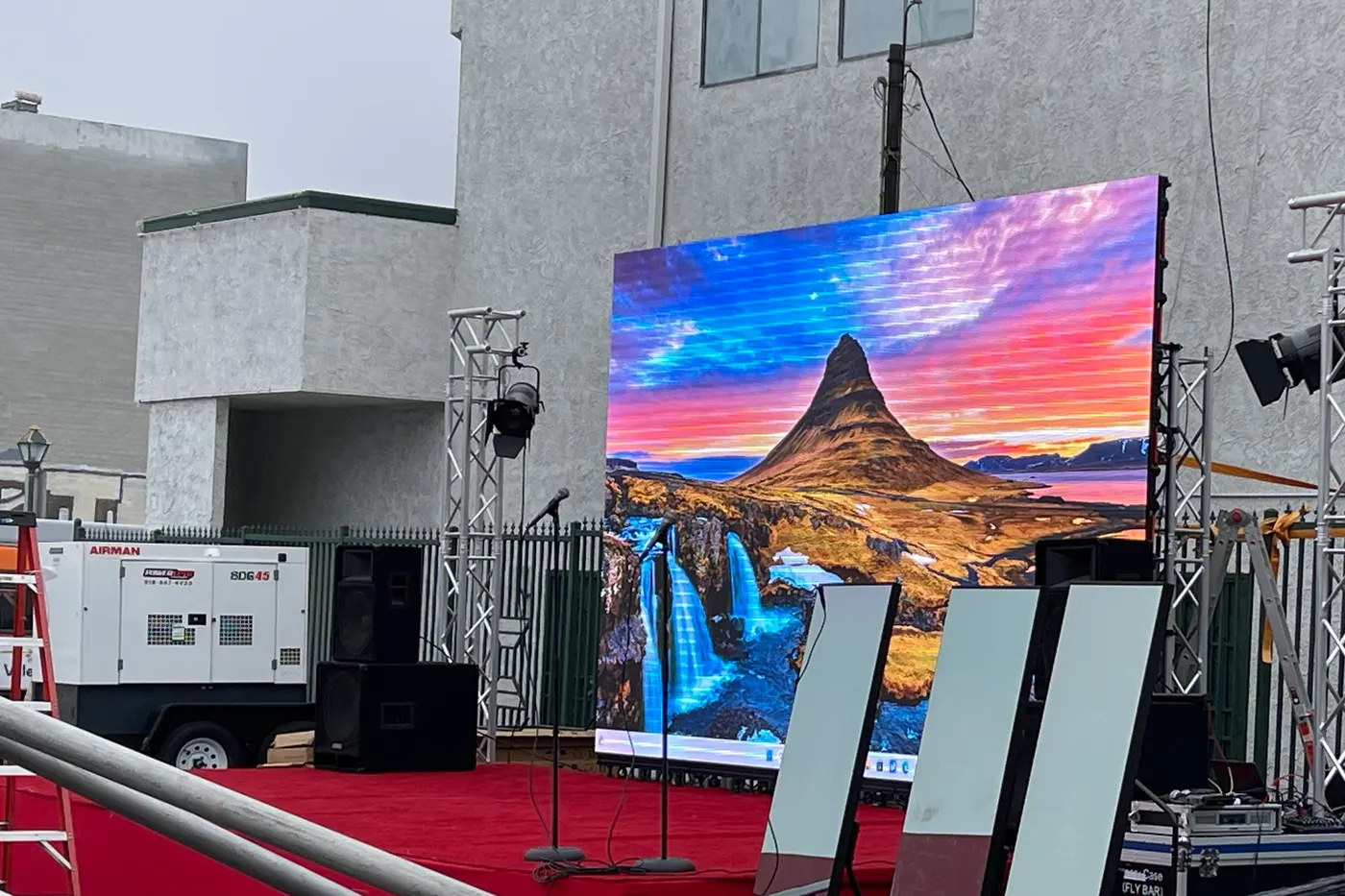
- Is the wall an outdoor panel? An indoor wall is not built for sun and weather. Most outdoor rental walls today are P3.9, at 4,000 to 6,000 nits; ask for the brightness and the IP rating in writing. Ours are P3.9 at 3,840 Hz, bright enough for daylight (Little Tokyo, below).
- What if it rains? Ask whether the screen and its connections are waterproof, not just the panels. Ours have played through rain (Pomona, below).
- Where does the power come from, and is it big enough? Size it to the whole stage, LED, sound and lighting together, with room to spare. An outdoor wall draws up to about 800 W per square meter at full brightness, so a 5 × 3 m wall can need up to 12 kW on its own. A generator that is too small trips, and takes the whole stage down with it (Chinatown, below).
- What holds it down? A ground-stacked outdoor wall stands in the open, so it is weighted. Ask how much ballast, and who brings it.
- Can you build the day before? Often the site is only free, or only quiet, the day before. A build the day before also leaves time to test after dark.
- Who looks after it overnight? Often the equipment stays on site overnight, in the open, ready to switch on in the morning. Agree with the organizer who is responsible for the site and the equipment that night.
- Where does show control go, and is there a backup? Outdoors the control desk needs shade and power too, and playback needs a main and a backup.
Little Tokyo, April 2026: a fan event in the plaza
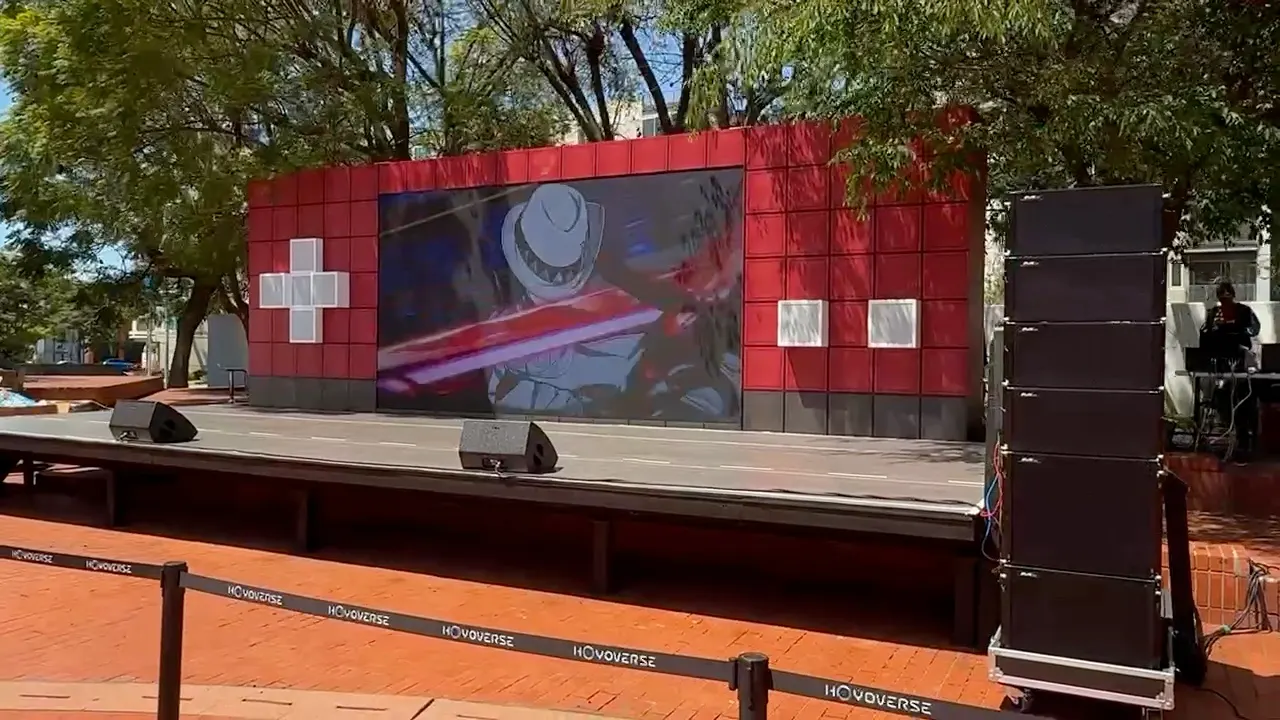
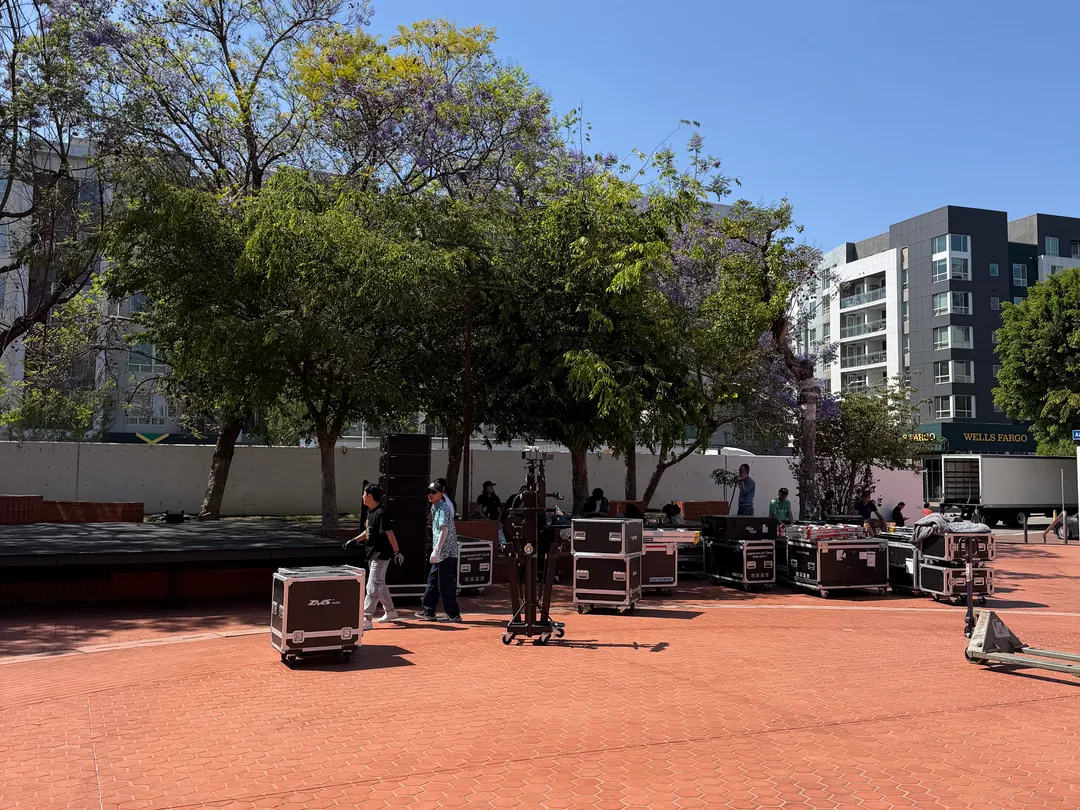
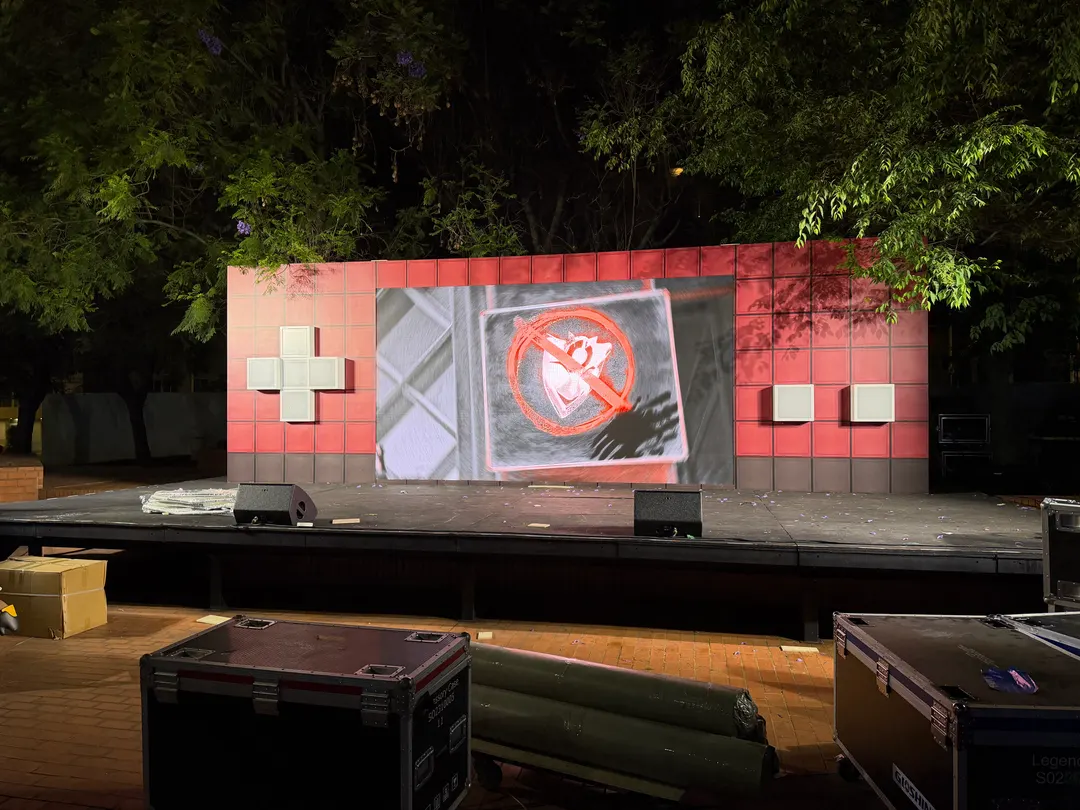
For a game’s third-anniversary fan event in the Little Tokyo plaza, downtown Los Angeles, we built a 4.5 × 2.5 m outdoor P3.9 wall at 3,840 Hz on the stage, on six 50 kg weights, eight 10-inch line-array speakers with subwoofers, wireless microphones, battery-powered wireless lighting and show control. The wall ran through the afternoon in full sun.
We loaded in on the afternoon of April 18, had the wall lit for a test after dark by 7:30 pm, left everything in the plaza overnight, ran the event on the 19th and struck that evening.
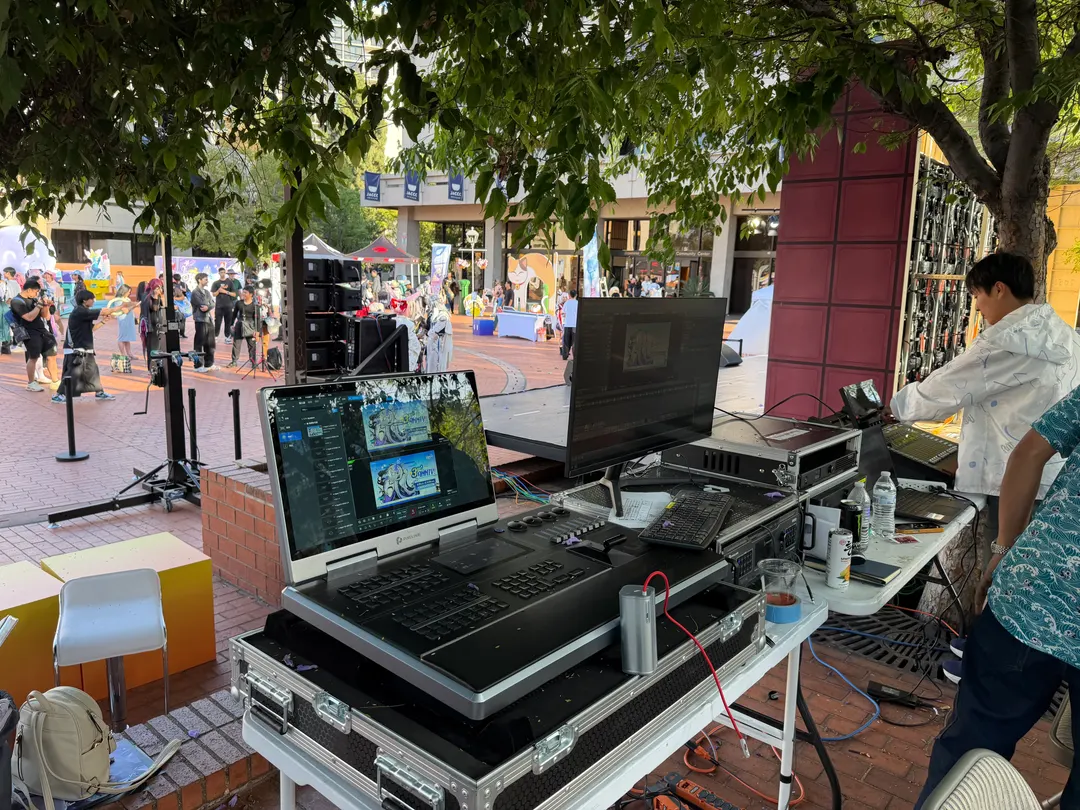
The venue supplied a generator and distribution; we brought our own 200 A three-phase 208 V distribution in case it was needed. Show control sat under a tree beside the stage: Hirender S3 playback, main and backup, through a PixelHue 4K switcher, with one audio and one video engineer running the show.
Chinatown, February 2024: a generator that kept tripping
Beside the 2024 Golden Dragon Parade we ran a 5 × 3 m Gloshine Legend 3.9 outdoor wall, sound and lighting on a stage in an open parking lot. The street closed for the parade, so the stage, the wall and the lighting went up the day before and stayed there overnight.
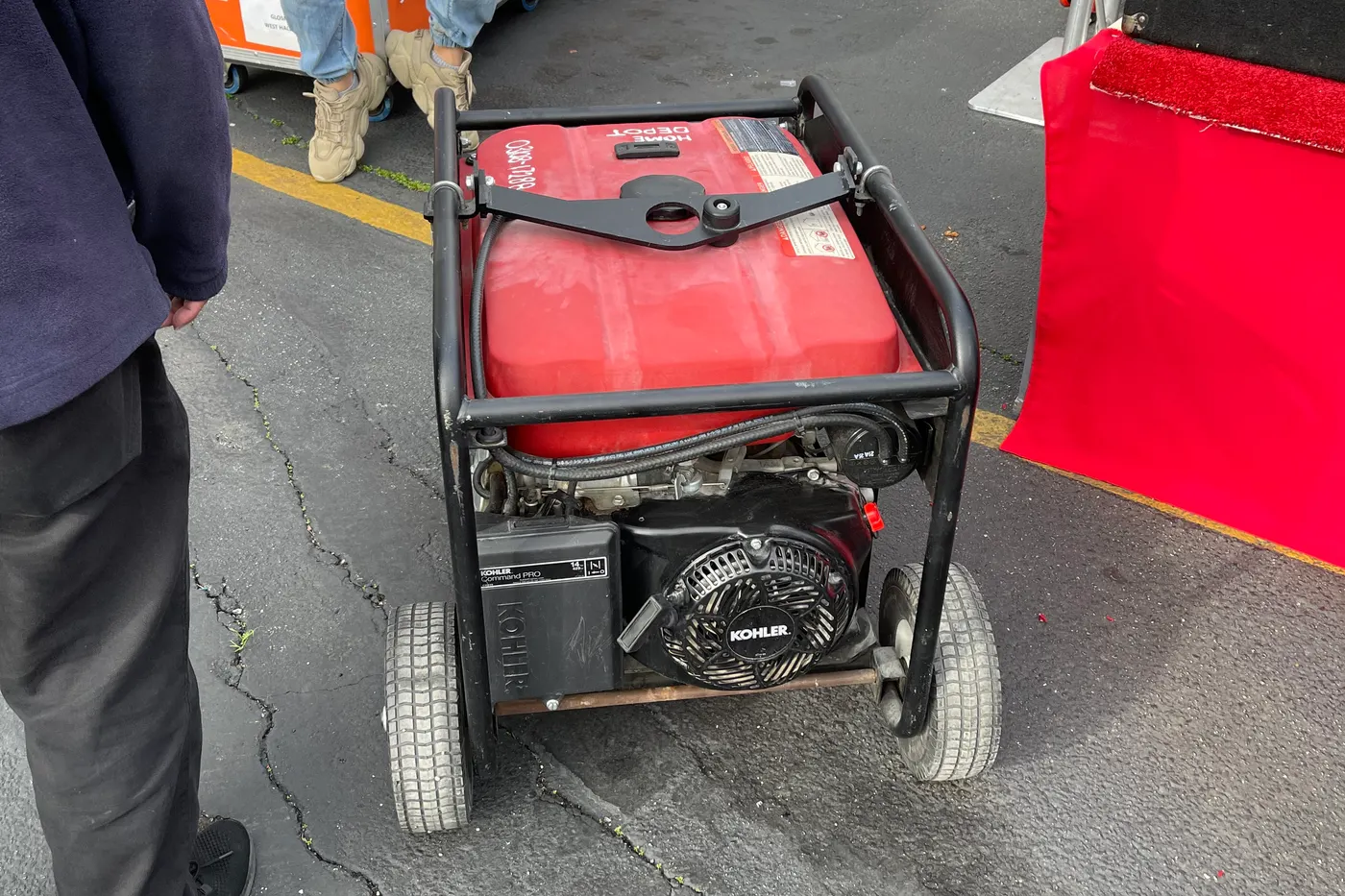
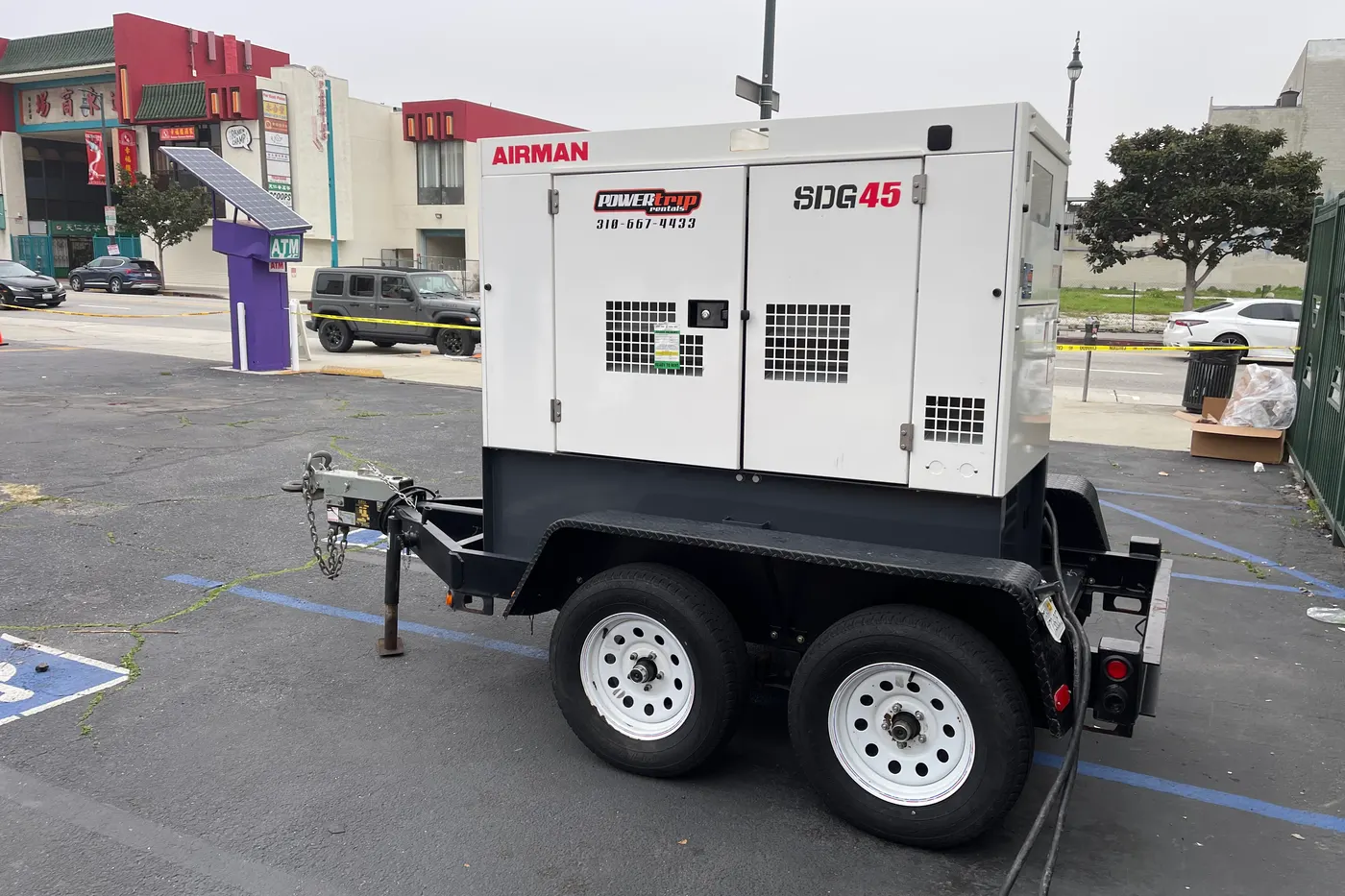
Power was the client’s. Their first generator, a portable unit, was too small for the stage and kept tripping, and every trip took the wall, the sound and the lights down. We asked for a 45 kVA towable diesel generator, the client brought it in, and the show ran on it.
Anime Expo 2025: a booth outside the hall
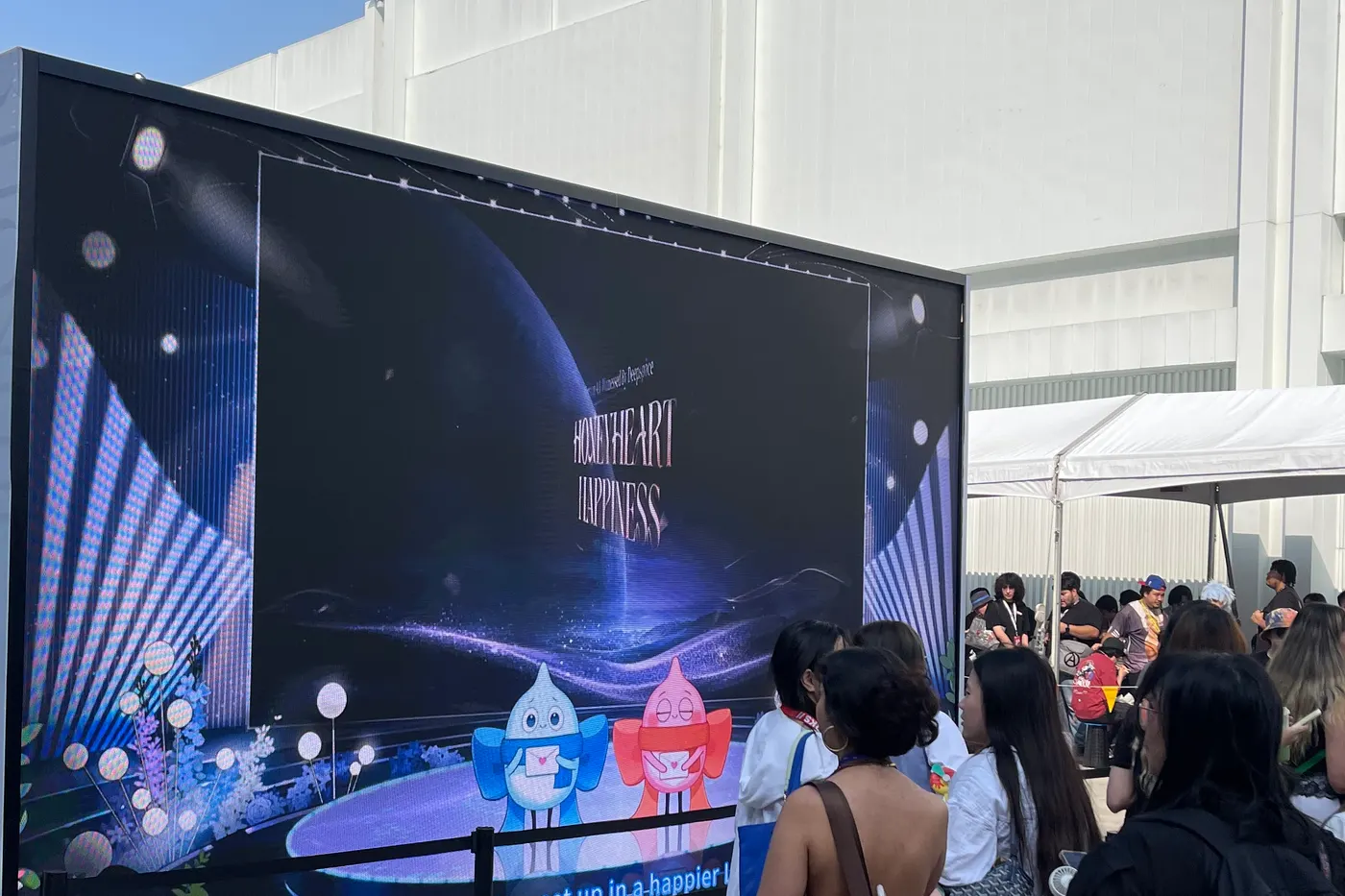
One of the booths we supplied at Anime Expo 2025 stood outdoors, outside the Los Angeles Convention Center: a 6 × 3.5 m Gloshine Legend 3.9 wall on six 50 kg weights, with six 200 W fill lights, on a 60 A three-phase 208 V supply ordered from the venue, through our own distribution.
Pomona, January 2023: playing through the rain
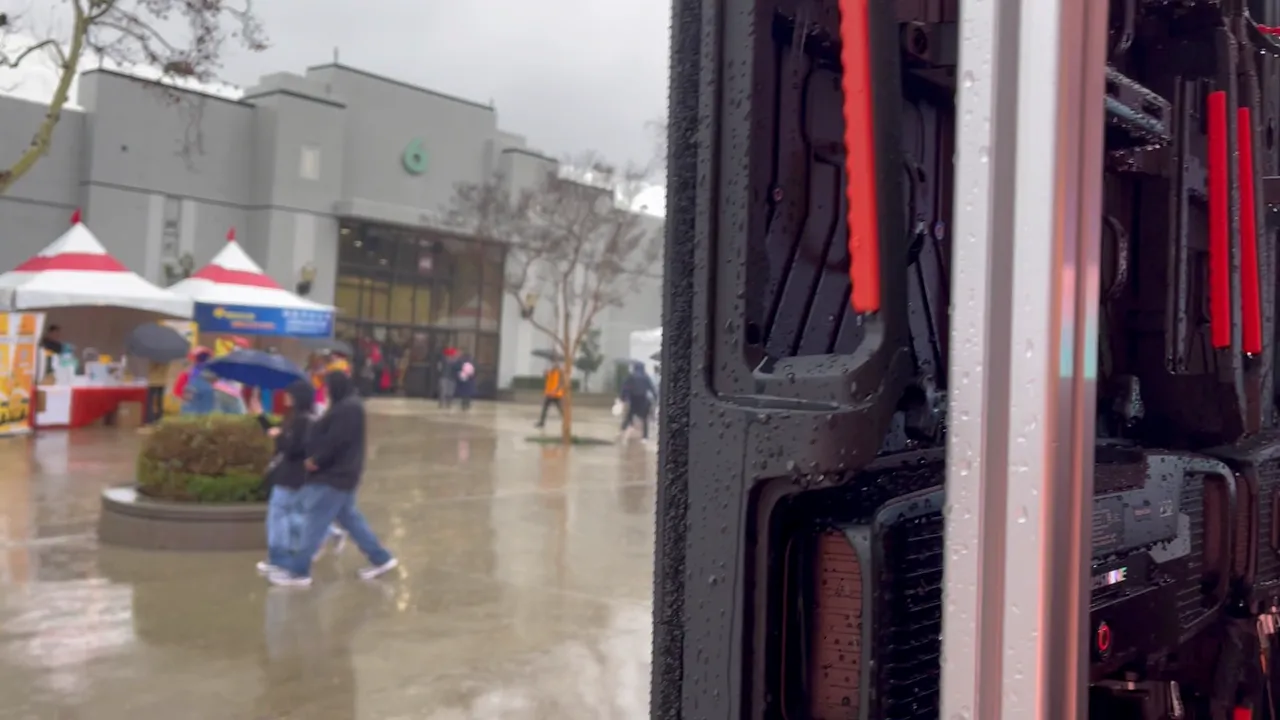
At the Asian American Expo 2023 at Fairplex in Pomona, January 14 and 15, our 5 × 2.5 m Gloshine Legend 3.9 outdoor wall stood in the open beside the tents.
It rained hard on the first day. The wall stood in the open and kept playing while visitors walked past under umbrellas.
Where we can help
PixelPro Productions rents its outdoor walls with the crew who build and run them: the wall, the sound, the lighting and the show control, with the power planned for the site.
Questions about outdoor LED screens
Can an LED screen be used outdoors in daylight?
Yes, with an outdoor panel. Most outdoor rental walls today are P3.9 at 4,000 to 6,000 nits; ask for the brightness and the IP rating in writing. At a fan event in the Little Tokyo plaza in April 2026, PixelPro Productions’ outdoor P3.9 wall played through the afternoon in full sun.
Can an outdoor LED screen run in the rain?
PixelPro Productions’ outdoor Legend 3.9 walls are made for daytime outdoor events. At the Asian American Expo 2023 at Fairplex in Pomona, our 5 × 2.5 m wall stood in the open and kept playing through a day of heavy rain.
What size generator does an outdoor LED screen need?
One sized to the whole stage, LED, sound and lighting together, with room to spare. An outdoor LED wall draws up to about 800 W per square meter at full brightness: up to 12 kW for a 5 × 3 m wall. At the 2024 Golden Dragon Parade the client’s portable generator kept tripping; the 45 kVA towable diesel generator we asked for solved it.
Is an outdoor LED screen priced like an indoor one?
Close to it. With PixelPro Productions an outdoor Gloshine Legend 3.9 wall is $3,990 all-in up to 11.5 × 6.6 ft and $6,490 at 16.4 × 9.8 ft, technician included; indoors, an 11.5 × 6.6 ft wall is $3,490. Each further day is 50% of the first day, as indoors. Wind ballast is included; a generator, if the site has no power near the wall, is quoted, and you arrange permits.
